OmniDrive Motor
A Smart Gear Motor can combine a motor, gearbox, and control features in one compact unit. That integration can simplify machine layouts and help engineers manage speed and torque more precisely. Picture a conveyor moving small packages: steady low-speed torque matters more than headline power, while feedback can help the system respond when the load changes.
The right choice depends on the application. Engineers should check rated torque, gear ratio, duty cycle, mounting space, operating temperature, and control compatibility. A motor that performs well on a clean test bench may behave differently beside a vibrating press or in a dusty production area. Details matter. So does service access.
A verified quotation from a named Smart Gear Motor specialist was not included in the supplied material, so I cannot responsibly attribute a statement to one. A useful design principle is simple: match the motor’s control and torque to the real load, not an idealized one. Smart features can improve coordination, but they cannot compensate for an unsuitable gearbox or weak installation. That is easy to overlook. Careful testing under actual operating conditions remains essential, and the final selection may still involve trade-offs between cost, precision, size, and maintenance.
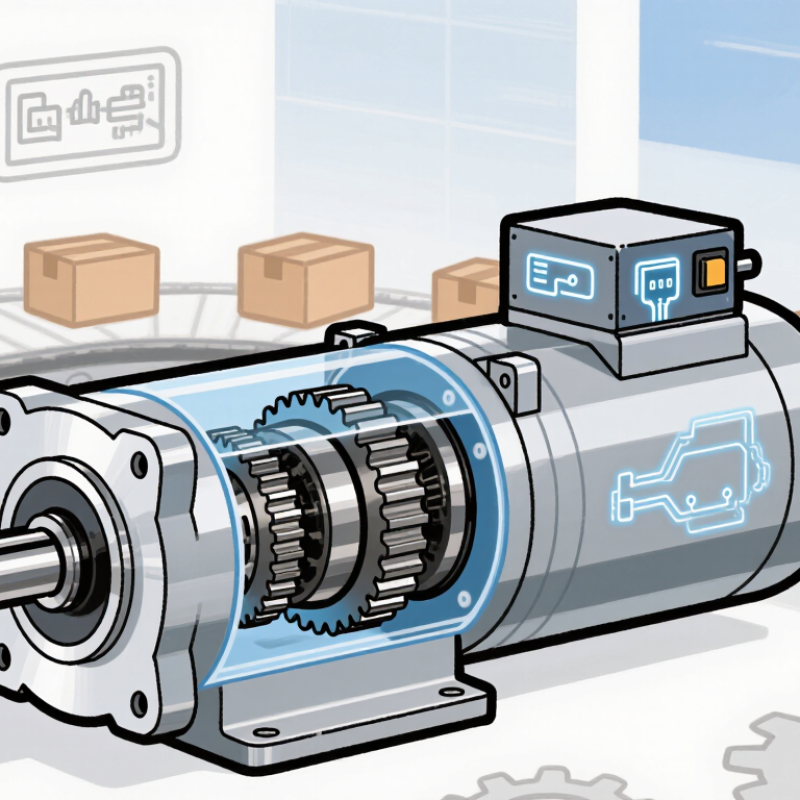
A smart gear motor combines an electric motor, a speed-reducing gearbox, and electronic controls or sensors in one coordinated drive. The gearbox lowers output speed and increases usable torque, while the electronics can monitor conditions such as speed, current, or temperature. Some designs also accept commands from a machine controller, allowing the drive to adjust its operation as loads change.
It is more than a motor with a gearbox attached. Feedback can help a conveyor hold a steady speed when its load varies, or let a packaging mechanism stop at a repeatable position. The exact features differ. “Smart gear motor” is not a perfectly standardized term, so check whether a unit includes sensors, communications, or only basic control electronics. There is a catch.
The energy context is significant: the International Energy Agency’s 2011 report, Energy-Efficiency Policy Opportunities for Electric Motor-Driven Systems, estimated that these systems used about 46% of global electricity. That figure describes motor-driven systems broadly, not savings guaranteed by smart gear motors. In practice, selection still depends on torque, duty cycle, mounting space, and the surrounding controls. A technically capable drive can be a poor fit if its feedback is never used.
A smart gear motor combines a motor, gearbox, sensors, and control electronics in one coordinated unit. The motor produces rotation; the gearbox reduces speed and increases usable torque. Sensors track details such as speed, temperature, or load. The controller can then adjust operation as conditions change. Small changes matter. On a packaging conveyor, for example, feedback can help maintain steady movement when cartons arrive unevenly.
The International Energy Agency’s 2011 report, Energy Efficiency Policy Opportunities for Electric Motor-Driven Systems, estimated that motor-driven systems use about 45% of global electricity. The U.S. Department of Energy’s 2021 motor systems market assessment also identified these systems as a major share of manufacturing electricity use. These figures explain why better motion control matters, but they do not guarantee savings from every installation. Still, integration is not magic. A sensor placed poorly may report misleading conditions, while an oversized gearbox can add cost and wasted energy. Match torque, speed, duty cycle, and feedback needs to the actual machine. Then test the setup under real loads; the first estimate is not always right.
A smart gear motor combines a geared drive with sensors and control electronics. Depending on its design, it can report speed, temperature, position, or changes linked to load. This feedback helps a machine respond to real operating conditions instead of relying on a fixed setting. Less guesswork.
The benefits show up in routine tasks.
On a packaging line, a controller can adjust motor speed as product spacing changes.
In a small conveyor, feedback may help maintain steady movement when the load grows heavier.
Integrated monitoring can also flag rising temperatures or unusual vibration before a stoppage occurs.
These signals support maintenance planning, but they do not replace inspection.
A compact unit can simplify wiring and reduce the number of separate components in a machine. It may also improve repeatability when equipment must start, stop, or hold position accurately.
Still, “smart” does not automatically mean better.
Electronics need suitable protection from dust, heat, and vibration, while the gear ratio must match the load. A mismatch can waste energy or shorten service life. Engineers should check the duty cycle, available space, required torque, and feedback needs before selecting a unit.
Choosing a smart gear motor starts with the load, not the catalog. Estimate required torque, output speed, acceleration, and peak starting load. A conveyor moving wet cartons needs different gearing from a small positioning stage. Check the duty cycle too: frequent starts can create more heat than steady operation. The International Energy Agency’s report, Energy-Efficiency Policy Opportunities for Electric Motor-Driven Systems, estimates that motor-driven systems use about 45% of global electricity. Efficient sizing matters.
Next, match the gearbox ratio and motor controls to the actual operating range. Consider encoder resolution, response time, allowable backlash, and how the motor will communicate with your controller. Measure the available mounting space and check ambient temperature, dust, and vibration. Review the supplier’s torque curves and thermal limits, not just peak ratings. Peak torque may last only briefly. A small mismatch here can cause noisy motion or repeated shutdowns.
Tips: Test with your real load and motion profile. Record current, temperature, and positioning error during a full operating cycle. Leave some thermal margin; the ideal specification can look less ideal after installation.
Smart gear motors are best suited to machines that need controlled motion at low speed and useful torque in limited space. Think of a packaging line indexing a tray, a conveyor stopping beneath a sensor, or a mobile robot turning in a narrow aisle. Integrated feedback and drive control can simplify coordination between motor and machine. Yet the benefit depends on the task; integration alone does not guarantee better performance.
The U.S. Department of Energy’s 2014 motor-system sourcebook estimates that motor-driven systems account for about 68% of electricity use in U.S. manufacturing. That figure covers many motor types, not smart gear motors specifically, but it shows why efficient motion design matters. The International Federation of Robotics reported 541,302 industrial robots installed worldwide in 2023, reflecting growing demand for automated motion. Robot adoption is context, not proof that every axis needs an intelligent gearmotor.
Consider smart gear motors for conveyors, case packers, automated guided vehicles, and compact assembly stations where speed changes, position feedback, or condition monitoring are useful. Check peak torque, duty cycle, gear backlash, heat, and washdown exposure before specifying one. A motor may handle a brief load but overheat during repeated starts. And there is a trade-off: built-in electronics can reduce wiring, yet make replacement more involved. I’d still question whether a simple fixed-speed drive would do the job.
It combines a motor, gearbox, sensors, and control electronics in one unit. The gearbox lowers speed and increases usable torque.
Sensors can track speed, temperature, or load. A controller may adjust operation when cartons arrive unevenly, helping maintain steady movement.
They suit equipment needing controlled, low-speed motion and useful torque in limited space. Examples include tray indexers, case packers, mobile robots, and compact assembly stations.
No. Motor-driven systems use a substantial share of electricity, but that broad figure does not prove savings from any specific installation. Fit and testing matter.
Check peak torque, speed, duty cycle, backlash, heat, and washdown exposure. A motor might handle one short load. Repeated starts can cause overheating.
Yes. Poor sensor placement may report the wrong conditions. Test feedback under real machine loads, not just during an initial setup.
They can reduce wiring and simplify coordination. But replacement may be more involved because the electronics are integrated. Not always simpler.
For steady, fixed-speed work, a basic drive may do the job. Extra controls can add cost, so I’d question whether the machine truly needs them.
A Smart Gear Motor combines a motor, gearbox, and control components into a coordinated motion system. By bringing these functions together, it can regulate speed, torque, direction, and positioning with greater precision than a basic motor-and-gearbox setup. Integrated control can also simplify system design, reduce wiring and installation effort, and support more consistent operation.
When choosing a Smart Gear Motor, consider the required speed and torque, load characteristics, positioning accuracy, duty cycle, available space, power supply, and control interfaces. The right choice depends on how these requirements work together in the application. Smart gear motors are especially suitable for equipment that needs compact, repeatable, and adjustable motion, such as automated machinery, robotics, conveyors, and precision handling systems. Matching the motor’s capabilities to the task helps achieve reliable performance without adding unnecessary complexity.
