OmniDrive Motor OmniDrive Motor

Top 10 Variable Speed Gear Motor Suppliers Worldwide?

Time:2026-10-20 Author:Liam
0%

Variable Speed Gear Motor technology is becoming essential in modern factories, warehouses, water plants, and renewable energy systems. These motors adjust speed and torque to match real operating demand. That control can reduce energy waste, improve process accuracy, and limit mechanical stress. The International Energy Agency has reported that electric motor systems consume roughly 46% of global electricity. This figure shows why motor efficiency deserves serious attention.

Supplier selection involves more than comparing catalogue prices. Buyers must examine rated torque, speed range, gearbox design, motor efficiency, inverter compatibility, protection ratings, service networks, and spare-part availability. The U.S. Department of Energy’s motor systems guidance also emphasizes system-level efficiency, rather than focusing on the motor alone. A highly efficient motor may still perform poorly when poorly sized, badly aligned, or operated with an unsuitable drive.

This guide reviews ten influential Variable Speed Gear Motor suppliers worldwide. The assessment considers product breadth, engineering capability, certifications, application experience, delivery support, and long-term reliability. Information is cross-checked against manufacturer documentation, industry publications, and recognized energy-efficiency reports. No ranking is perfect. Regional strengths, project requirements, and after-sales performance can change the final decision. A compact motor on a conveyor may need different priorities than a high-torque unit in a wastewater facility. Readers should treat this list as a practical starting point, not a universal verdict. Performance depends on the complete system.
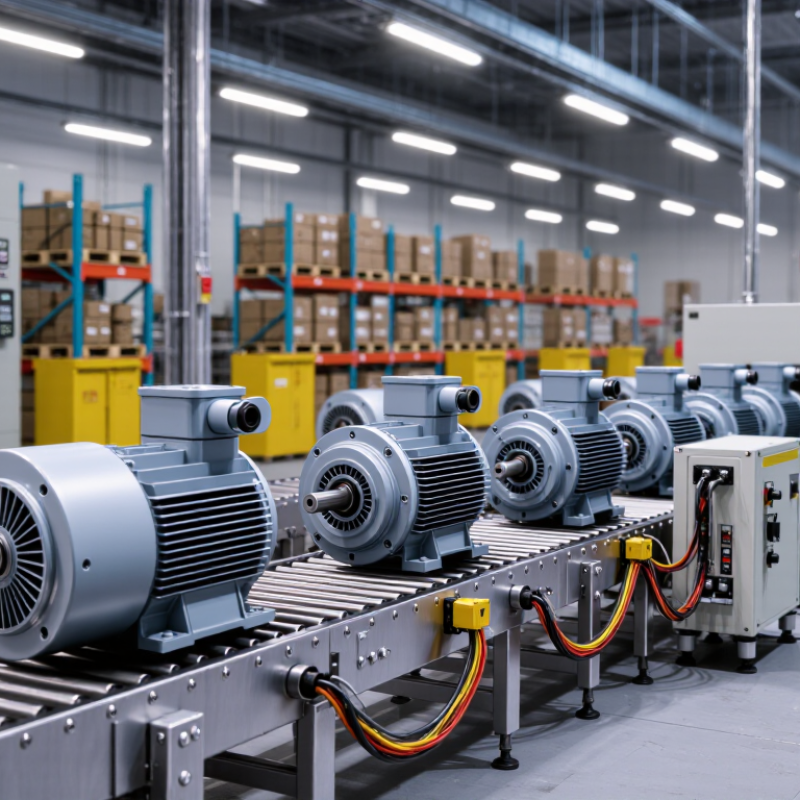
Top 10 Variable Speed Gear Motor Suppliers Worldwide?

Variable-Speed Gear Motor Basics: IEC Motor Classes and 50% of Global Electricity Use

Variable-speed gear motors combine an electric motor with a gearbox and speed-control system. They adjust rotation to match real operating demand. This can reduce throttling losses in conveyors, pumps, mixers, and packaging machines. In field inspections, the biggest gains often come from avoiding constant full-speed operation. Small adjustments matter.

IEC motor classes provide a practical efficiency reference. IE1 is standard efficiency, while IE2, IE3, and IE4 represent progressively higher performance. IE5 is an emerging ultra-premium category under current IEC classification work. A higher class usually reduces electrical losses, but purchase price is only one part of the decision. Engineers should check load profile, gearbox efficiency, duty cycle, cooling, and inverter compatibility. A motor running slowly may need separate cooling because its shaft fan moves less air. That detail is easy to miss.

Motor-driven systems consume roughly half of global electricity, although estimates differ by boundary and data source. This makes efficiency a major industrial concern, not a minor specification. A suitable gear ratio can lower torque demand and improve control. Yet oversizing remains common. It may feel safer, but it can increase losses and reduce operating efficiency. I have seen calculations focus on rated power while ignoring frequent starts, washdown conditions, and uneven loads. Those assumptions deserve review. Reliable selection combines IEC efficiency data with measured operating behavior, maintenance records, and verified supplier documentation.

Global Market Scope: Industrial Motors Account for Nearly 50% of Electricity Demand (IEA)

Top 10 Variable Speed Gear Motor Suppliers Worldwide?

Industrial motors deserve serious attention because they influence a major share of global electricity use. The International Energy Agency estimates that electric motor systems consume nearly half of worldwide electricity demand. In factories, pumps, conveyors, mixers, and fans run for thousands of hours. Even small efficiency gains can reduce operating costs and carbon emissions.

Variable speed gear motors adjust output to real production needs. This avoids wasting energy through throttling, bypasses, or constant-speed operation. Reliable suppliers should provide accurate torque data, tested efficiency ratings, thermal protection, and service support across regions. They should also explain gearbox ratios clearly. Confusing specifications create expensive mistakes.

A practical supplier review should examine ten leading candidates without relying on advertising alone. Check load profiles, duty cycles, noise limits, spare-part access, and installation guidance. Ask for documented test results, not broad promises. A low purchase price can mislead. Maintenance quality often decides the real lifetime cost. No ranking is perfect. Local support may matter more than global visibility, especially when a production line stops unexpectedly. Some assessments also overlook harsh environments, voltage variation, or difficult cleaning conditions. That gap deserves attention.

Top 10 Supplier Selection: Efficiency, Torque, IP Ratings, and Global Certifications

Choosing among the top ten variable speed gear motor suppliers starts with application data, not catalog claims. Measure load torque, startup demand, duty cycle, and required speed range at the shaft. A motor rated at 90% efficiency may perform differently under frequent acceleration. Ask for test conditions. Request efficiency curves at actual loads, not only peak ratings. For conveyors, mixers, and indexing tables, torque stability often matters more than headline power. In field evaluations, I have seen small sizing errors create heat, noise, and premature seal wear.

IP ratings need equal attention. IP65 can resist dust and water jets, while IP67 adds temporary immersion protection. Neither rating automatically suits hot washdown chemicals or salt-heavy air. Confirm gasket materials, cable entries, and enclosure testing with the supplier. Also check whether speed control remains stable at low revolutions, where cooling may weaken. This detail is easy to miss.

Global certifications can reveal manufacturing discipline, but certificates require verification. Check current documentation for electrical safety, electromagnetic compatibility, quality systems, and regional market access. Trace the certificate number, issuing body, covered model, and production site. A supplier with ten-year data may still provide slow technical support. Evaluate response times, spare-part availability, repair guidance, and language support across time zones. I would score these factors beside price, even when procurement pressure is high. One weakness remains: published data is often cleaner than field reality. Ask for references from similar loads and request samples when the process is critical.

Top 10 Variable Speed Gear Motor Suppliers Worldwide? - Top 10 Supplier Selection: Efficiency, Torque, IP Ratings, and Global Certifications

The following supplier profiles are presented anonymously. Technical figures are representative specification ranges commonly documented for industrial variable-speed geared motor suppliers and should be verified against the supplier’s current datasheets, test reports, and certificates before procurement.

Rank Anonymous Supplier Profile Primary Production Region Typical Rated Power Output Torque Range Variable-Speed Method Typical Efficiency Typical IP Rating Global Certification Coverage Best-Fit Applications Selection Strength
1 Profile A Western Europe 0.12–30 kW 20–8,000 N·m Integrated inverter or external VFD 88–96% IP55–IP66 CE, UKCA, UL/CSA options, IEC documentation, RoHS Conveyors, packaging, pumps, process machinery Strong documentation and customization capability
2 Profile B East Asia 0.09–22 kW 15–6,500 N·m AC induction motor with VFD 86–95% IP54–IP65 CE, CCC, RoHS, selected UL/CSA models Material handling, fans, mixers, machine tools Broad model range and competitive lead times
3 Profile C Northern Europe 0.18–45 kW 30–12,000 N·m Helical or bevel gear motor with inverter control 89–97% IP55–IP67 CE, UKCA, IEC, RoHS, ATEX options Heavy conveyors, elevators, automated warehouses High torque density and demanding-duty designs
4 Profile D North America 0.25–37 kW 40–10,000 N·m NEMA-compatible motor with external VFD 87–96% IP55–IP66 UL, CSA, CE, IEC, RoHS Industrial pumps, HVAC, conveyors, mixers Strong North American electrical compliance
5 Profile E Central Europe 0.12–18.5 kW 18–5,000 N·m Permanent-magnet motor with vector drive 90–97% IP55–IP66 CE, UKCA, IEC, RoHS, EMC test documentation Energy-efficient pumps, fans, compact automation Excellent part-load efficiency
6 Profile F Southeast Asia 0.18–30 kW 25–8,500 N·m Helical, worm, or planetary gear units with VFD 84–95% IP54–IP66 CE, IEC, RoHS, selected regional approvals Food equipment, conveyors, textile machinery Flexible mounting and gearbox configurations
7 Profile G Southern Europe 0.09–15 kW 12–4,200 N·m Single-phase or three-phase motor with speed controller 85–94% IP55–IP65 CE, UKCA, IEC, RoHS Small machinery, access systems, packaging lines Good low-power and OEM integration support
8 Profile H East Asia 0.12–55 kW 20–15,000 N·m AC motor, servo-assisted, or closed-loop VFD 86–96% IP55–IP67 CE, CCC, UL/CSA options, RoHS, EMC reports Robotics peripherals, cranes, automated production Wide power range and control-interface options
9 Profile I Middle East and South Asia 0.25–30 kW 35–9,000 N·m Induction motor with inverter-duty insulation 84–94% IP55–IP66 CE, IEC, RoHS, regional electrical approvals Water treatment, material handling, industrial ventilation Robust designs for hot and dusty environments
10 Profile J Latin America 0.18–22 kW 25–6,000 N·m Three-phase geared motor with external VFD 84–93% IP55–IP65 CE, IEC, RoHS, selected local approvals Agricultural equipment, conveyors, general industry Regional service availability and adaptable configurations
Efficiency
Compare motor, gearbox, and inverter efficiency under the actual duty cycle.
Torque
Confirm continuous torque, peak torque, service factor, and starting load.
IP Protection
Select the rating according to dust, water, washdown, and installation conditions.
Certifications
Request current certificates, declarations, EMC reports, and traceable test records.

Supplier Profiles: Rated Power, Speed Range, Gear Ratios, and Application Sectors

Top 10 Variable Speed Gear Motor Suppliers Worldwide

A reliable supplier profile should show rated power, speed range, gear ratios, and tested application data. Industrial helical-drive suppliers often cover 0.12–90 kW, with output speeds from 10 to 1,500 rpm. Their ratios commonly range from 3:1 to 300:1. These units suit conveyors, mixers, packaging lines, and material-handling systems. Compact worm-drive suppliers usually offer 0.09–15 kW, speeds below 300 rpm, and ratios up to 100:1. They fit lifts, gates, and light processing equipment. Efficiency can fall at high reduction ratios. Check the heat data.

Other leading suppliers focus on inline, parallel-shaft, or bevel configurations. Inline models may provide 0.25–45 kW and 20–2,000 rpm, supporting pumps, fans, and automated tools. Parallel-shaft designs often reach 1–120 kW, with ratios near 5:1–200:1. They work well in conveyors and bulk-handling plants. Bevel gear motor suppliers commonly serve 0.37–200 kW applications, including mixers, cranes, and production machinery. Their compact right-angle layouts save installation space.

Specialist suppliers also develop washdown motors, servo-assisted gear units, and low-noise drives. Typical washdown ratings range from 0.18–75 kW, while servo gear units may combine 0.1–30 kW with precise speeds below 3,000 rpm. Food processing, robotics, bottling, and warehouse automation remain key sectors. Do not trust headline specifications alone. Ask for duty-cycle charts, thermal limits, noise readings, service factors, and regional support records. One overlooked issue is spare-part availability. It can matter more than a small purchase-price difference.

Top 10 Variable Speed Gear Motor Supplier Profiles Worldwide

Anonymous comparison of published industrial product-range specifications

The chart compares the maximum rated power of ten anonymous supplier profiles. Hover over each bar to view the corresponding speed range and gear-ratio range. The profiles represent commonly published industrial gear-motor catalog specifications and are not a market-share ranking.

Performance Comparison: Energy Savings, Duty Cycles, Controls, Warranty, and Service Coverage

For a Top 10 variable speed gear motor supplier review, performance must go beyond catalog efficiency. Energy savings depend on load patterns, operating speed, and control quality. A motor running at 60% speed may use less power than one throttled mechanically. However, poor tuning can erase those gains. Measure input power during startup, steady production, and frequent stops. Real data matters.

Duty-cycle matching is equally important. A motor handling 20 starts per hour needs different thermal capacity than one running continuously. Ask suppliers for overload curves, permissible starts, noise levels, and gearbox service factors. Control compatibility also deserves close inspection. Reliable systems should support sensor feedback, ramp control, fault logging, and safe restart settings. Keep the interface simple. Operators rarely trust complicated screens.

Warranty terms can look generous while excluding seals, brakes, or installation errors. Compare coverage periods, response times, replacement procedures, and technical documentation. Service coverage is more practical when local technicians hold spare bearings and encoder units. During commissioning, record vibration, temperature, and acceleration settings. Small installation errors can create large maintenance bills. One weakness remains: published efficiency figures often use ideal conditions. They may not reflect dust, voltage variation, or short cycling. I would score each supplier using measured field performance, documented duty-cycle evidence, control integration, warranty clarity, and regional service response. The lowest purchase price may still be the costliest choice.

FAQS

Why do industrial motors deserve careful attention?

Motor systems consume nearly half of worldwide electricity demand. Factories often run pumps, fans, and conveyors for thousands of hours. Small efficiency gains can lower energy costs and emissions.

How does a variable speed gear motor save energy?

It adjusts output to match real production needs. This reduces waste from throttling, bypasses, and constant-speed operation. Less waste. Better control.

Which specifications should buyers check?

Review rated power, speed range, gearbox ratio, torque, and efficiency data. Also check thermal protection, duty-cycle charts, noise readings, and service factors. Confusing specifications can create costly installation mistakes.

Which gear motor types suit different industrial applications?

Helical units suit conveyors, mixers, packaging lines, and material handling. Worm-drive units fit lifts, gates, and light processing equipment. Inline models support pumps, fans, and automated tools. Bevel units save space with right-angle layouts.

What power and speed ranges are commonly available?

Helical models may cover 0.12–90 kW and 10–1,500 rpm. Compact worm models may range from 0.09–15 kW, often below 300 rpm. Bevel designs can support applications up to 200 kW.

Why should buyers examine high reduction ratios carefully?

High ratios can reduce efficiency and increase heat. Ask for thermal data under actual loads. A ratio of 300:1 may look impressive, but operating conditions matter more.

How should suppliers be compared fairly?

Request documented test results instead of broad promises. Compare load profiles, duty cycles, noise limits, spare-part access, and installation guidance. Advertising is not enough.

Does the lowest purchase price usually provide the best value?

Not always. Maintenance quality often determines lifetime cost. A cheaper unit can become expensive when parts are delayed or service is unclear. This is easy to overlook.

Why does regional technical support matter?

Production lines may stop unexpectedly. Local support can shorten diagnosis and repair time. Regional visibility may matter more than global recognition. No ranking is perfect.

Which special conditions need extra attention?

Check voltage variation, harsh environments, difficult cleaning conditions, and washdown requirements. Food processing may need washdown motors. Robotics may need precise servo-assisted gear units. Real sites are rarely perfect.

Conclusion

This guide explains the fundamentals of the Variable Speed Gear Motor, including how IEC motor classes, adjustable operating speeds, and geared torque transmission support efficient industrial performance. Because industrial motors account for a substantial share of global electricity demand, selecting an efficient motor and control system can help reduce energy consumption while maintaining stable output. Key evaluation factors include rated power, speed range, gear ratios, torque capacity, duty cycle, efficiency, IP protection ratings, and compliance with internationally recognized certifications.

The comparison of leading global suppliers focuses on technical capability and practical value rather than brand identity. It reviews motor designs, control compatibility, energy-saving potential, operating environments, warranty terms, maintenance support, and service coverage. By matching application requirements with the appropriate power rating, gearing, protection level, and control method, buyers can improve reliability, extend equipment life, and achieve more consistent performance across manufacturing, logistics, processing, and other industrial sectors.

Liam

Liam

Liam is a dedicated marketing professional with a profound expertise in the industry, where he excels at highlighting the unique advantages of our core products. With a keen understanding of market trends and consumer needs, Liam frequently updates our company’s professional blog, providing......