 OmniDrive Motor
OmniDrive Motor
OmniDrive Motor
Selecting the right Low Voltage Gear Motor is a practical efficiency decision, not merely a purchasing exercise. In a conveyor, packaging line, or compact automated gate, the motor must deliver steady torque inside a limited space. Voltage, duty cycle, gearbox ratio, noise, heat, and service access all influence long-term performance. Small errors become expensive when thousands of units operate continuously.
The International Energy Agency’s Energy Efficiency 2023 report highlights industry as a major global energy consumer, reinforcing the value of efficient motor-driven equipment. The U.S. Department of Energy’s Improving Motor and Drive System Performance guide also emphasizes correct sizing, preventive maintenance, and system-level efficiency. These principles apply directly to low-voltage gearmotor selection. A 24-volt DC planetary unit may suit robotic equipment requiring high torque density. A worm gear motor can offer compact reduction and useful self-locking behavior, although efficiency may be lower. Helical, bevel, and spur designs bring different advantages in conveyors, mixers, and material-handling systems.
Details matter.
Buyers should verify rated torque, starting current, gearbox backlash, IP protection, insulation class, and expected operating hours. IEC 60034 efficiency classifications provide a recognized framework for comparing motor performance, but they do not replace application testing. Manufacturer claims can look precise. Real conditions are less tidy. Ambient heat, voltage fluctuation, poor alignment, and unexpected overloads may change results. This guide compares leading Low Voltage Gear Motor types for global buyers, while acknowledging that the cheapest specification is rarely the lowest lifecycle cost.
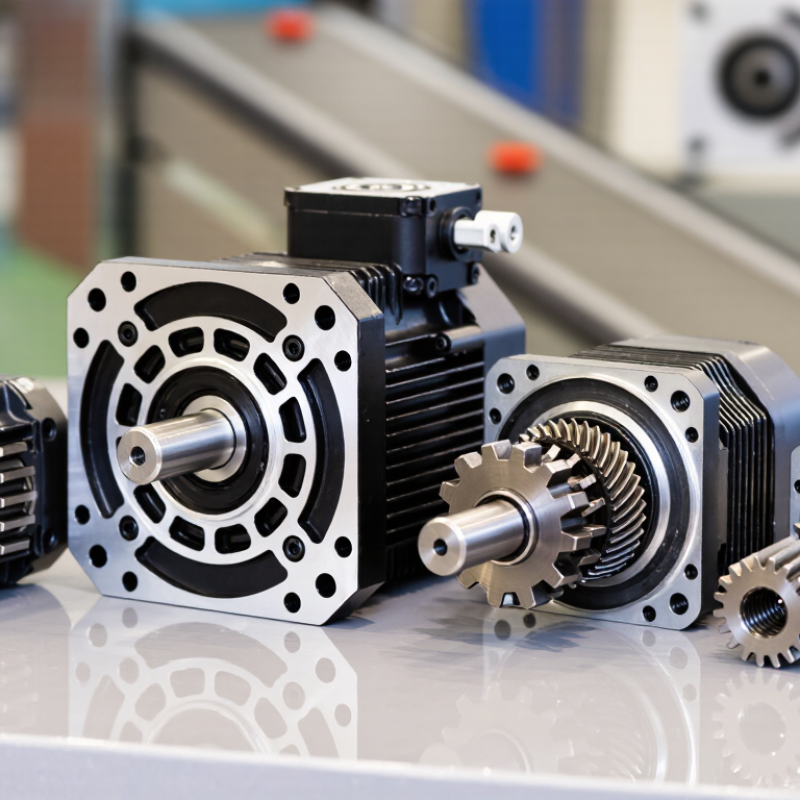
Top Low Voltage Gear Motor Types for Global Buyers
Low-voltage gear motors commonly use helical, worm, bevel, or planetary gearsets. Their mechanical design determines torque, speed, and efficiency. Voltage classification is a separate issue. Under IEC practice, low voltage generally covers systems up to 1,000 V AC. NEMA practice commonly places low-voltage motors at 600 V or below. These limits are not interchangeable certifications. Buyers should verify the motor standard, frequency, insulation system, and nameplate data.
A 400 V, 50 Hz IEC motor may suit many European installations. A 460 V, 60 Hz NEMA motor may fit North American machinery. The difference affects current, heating, starting performance, and gearbox output. Small details matter. Check phase configuration, service factor, enclosure rating, and inverter-duty suitability. The International Energy Agency reports that electric motor systems consume roughly half of global electricity, while industrial motor systems represent a major share of factory electricity demand. Efficiency deserves attention, even in compact drives.
Real installations are less tidy than catalogs suggest. I have seen buyers select a gear ratio correctly, then overlook cable length or variable-frequency drive settings. That mistake can increase heat and noise. European Commission motor-system studies also indicate that optimized motor systems can deliver substantial energy savings, but published percentages vary by application. A cautious evaluation should measure load cycles, ambient temperature, starts per hour, and actual torque before choosing between a worm gearbox and a more efficient helical or bevel design.
| Gear Motor Type | Typical Motor and Supply | Typical Ratio Range | Typical Output Speed | Typical Output Torque | Main Advantages | Common Applications |
|---|---|---|---|---|---|---|
| Spur Gear Motor | Brushed DC or small induction motor; commonly 12, 24, or 48 VDC, and 110–240 VAC | 3:1 to 100:1 | Approximately 20–1,500 rpm | Approximately 0.05–80 N·m | Compact, economical, and suitable for moderate loads and intermittent duty | Small conveyors, vending equipment, actuators, feeders, and light automation |
| Helical Gear Motor | Three-phase or single-phase induction motor; commonly 200–480 VAC, within applicable low-voltage limits | 3:1 to 300:1 | Approximately 5–500 rpm | Approximately 10–8,000 N·m | High mechanical efficiency, low noise, and good continuous-duty performance | Conveyors, packaging machinery, process equipment, mixers, and material handling |
| Helical-Bevel Gear Motor | Three-phase induction or permanent-magnet motor; commonly 200–480 VAC | 5:1 to 400:1 | Approximately 3–400 rpm | Approximately 50–20,000 N·m | High torque density, efficient right-angle transmission, and strong radial-load capability | Heavy conveyors, palletizers, lifting systems, cranes, and industrial automation |
| Worm Gear Motor | AC induction, brushed DC, or BLDC motor; commonly 12–48 VDC or 110–480 VAC | 5:1 to 100:1 per stage | Approximately 5–300 rpm | Approximately 1–4,000 N·m | Low cost, compact right-angle layout, and potential self-locking at selected ratios | Gates, positioning systems, conveyors, hoists, rotary tables, and adjustable mechanisms |
| Planetary Gear Motor | BLDC, servo, or permanent-magnet motor; commonly 24–120 VDC or 200–480 VAC | 3:1 to 10,000:1 using multiple stages | Approximately 1–2,000 rpm | Approximately 0.2–50,000 N·m | High torque density, low backlash options, and strong shock-load resistance | Robotics, servo positioning, mobile equipment, machine tools, and precision automation |
| Hypoid Gear Motor | Three-phase induction or permanent-magnet motor; commonly 200–480 VAC | 5:1 to 200:1 | Approximately 10–500 rpm | Approximately 20–6,000 N·m | Quiet right-angle operation, compact dimensions, and high reduction efficiency | Conveyor drives, food-processing machinery, packaging lines, and compact industrial systems |
| Cycloidal Gear Motor | Induction or servo motor; commonly 200–480 VAC, with selected low-voltage DC versions | 6:1 to 6,500:1 using multiple stages | Approximately 0.5–400 rpm | Approximately 50–60,000 N·m | High shock-load capacity, low backlash, and large reduction ratios in a compact package | Robotic joints, mixers, hoists, conveyors, and high-load positioning equipment |
One common standard allows up to 1,000 volts AC. Another commonly used limit is 600 volts. These limits are not interchangeable certifications. Always check the nameplate and motor standard.
A 400-volt, 50-hertz motor may suit one installation. A 460-volt, 60-hertz motor may suit another. The difference affects current, heating, and starting performance. Check phase configuration carefully.
Common designs include helical, worm, bevel, and planetary gearsets. Helical units support steady torque and lower noise. Worm units save space but may produce more heat. Bevel designs help with tight layouts.
Planetary motors suit compact machines needing high torque. Their gears share loads across several contact points. Ratios above 100:1 are possible in short housings. They may serve conveyors, valves, and small actuators.
No.
IE3 is a practical baseline for many industrial systems. IE4 can reduce waste during long operating hours. Efficiency labels alone do not guarantee lower energy use. An oversized gearbox may waste energy under light loads. I would measure the real load before trusting the label.
IP55 generally protects against dust and water jets. IP66 provides stronger dust sealing and temporary water resistance. IP69K suits harsh washdown with hot, high-pressure water. Inspect seals, connectors, cable glands, and breathers too. The housing alone is not enough.
Measure load cycles, ambient temperature, starts per hour, and actual torque. Check cable length and variable-frequency drive settings. A sealed housing may feel cool initially. Heat can build inside after repeated starts. Catalog selection is not always reliable.
A Low Voltage Gear Motor is a practical solution for industrial equipment that requires controlled speed, reliable torque, and efficient power transmission. Low-voltage classifications generally include IEC systems up to 1,000 V and NEMA systems up to 600 V. Helical gear motors are well suited to continuous-duty applications, offering smooth operation and efficiency levels commonly reaching 90–98%. Worm gear motors provide compact designs and high reduction ratios of up to 100:1, although their typical efficiency ranges from 40–85% depending on configuration and operating conditions.
For applications demanding greater torque density, planetary gear motors can deliver compact performance with reduction ratios above 100:1. Global buyers should evaluate more than speed and torque, including IE3 or IE4 efficiency ratings, IP55 to IP69K protection levels, thermal conditions, noise, maintenance needs, and duty classifications. Matching the gear arrangement and protection specification to the operating environment helps improve service life, energy performance, and overall equipment reliability.
