 OmniDrive Motor
Choosing a High Performance Gear Motor is not a matter of comparing catalog torque figures alone. Buyers must examine rated output, reduction ratio, duty cycle, efficiency, thermal limits, backlash, and service access. A motor that handles a brief test load may overheat during a continuous production shift. Fit matters.
This guide compares ten suppliers serving different industrial needs, from compact automation drives to rugged systems for conveyors and material handling. It looks at product range, customization, documentation, quality controls, and the support available after installation. Those details help distinguish a suitable supplier from one whose specifications only look impressive on paper. A useful engineering principle is: “Match the gear motor to the real load, not the idealized one.” This is an original editorial line, not a verified quotation from a named expert; no source was provided for an attributable expert quote.
Selection still involves judgment. A buyer should check the actual operating profile, including starts per hour, ambient temperature, mounting position, and expected maintenance access. Ask suppliers for relevant test data and clarify what their ratings assume. Compare like with like.
No single ranking fits every plant. Some buyers value short lead times; others need precise motion control or long service life under heavy loads. This introduction sets out a practical comparison, while recognizing that supplier claims deserve independent verification. The right choice depends on the machine, the operating conditions, and the evidence available.
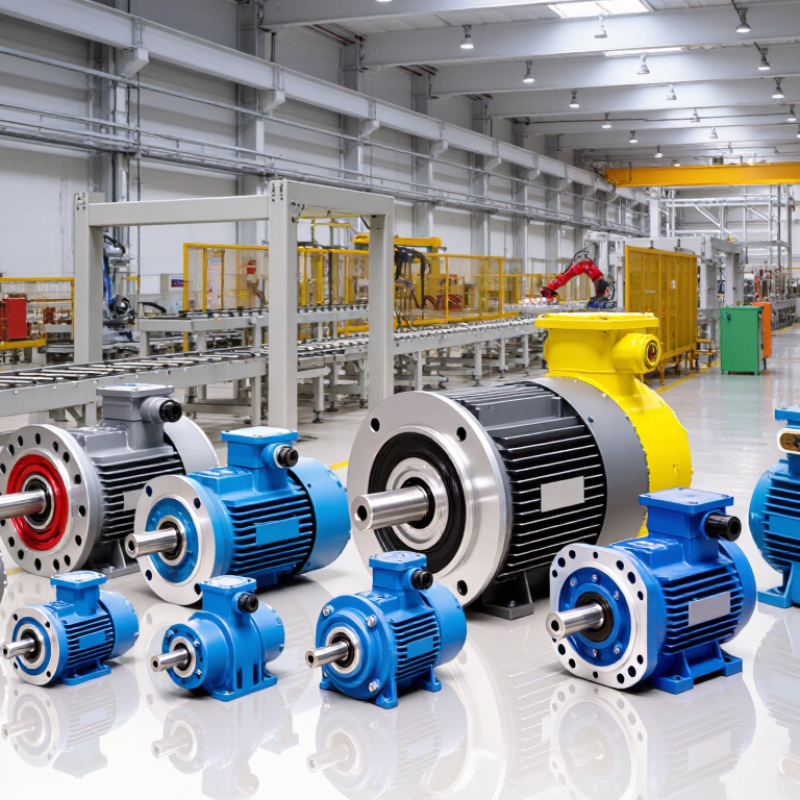
A gear motor combines an electric motor with a gearbox to match speed and torque to a machine’s needs. The gearbox reduces rotational speed and increases output torque, with some power lost as heat. This makes the unit useful for conveyors, mixers, lifts, and compact automated equipment. The International Energy Agency’s 2011 report, Energy-Efficiency Policy Opportunities for Electric Motor-Driven Systems, estimates that motor-driven systems use about 46% of global electricity. The figure is broad, but it shows why efficiency deserves attention.
High performance is not just a high efficiency rating. Engineers also check rated torque, duty cycle, starting load, thermal limits, and gearbox service factor. At a packaging conveyor, for example, repeated starts can create more stress than steady running. A motor sized only for the average load may overheat or wear early. Small details matter. Mounting position and lubrication affect heat removal and gear life, while backlash can affect positioning accuracy. For pumps, low-speed torque and continuous-duty temperature rise may matter most. A tidy datasheet cannot capture every real operating condition. Field measurements help reveal what calculations miss, and that is easy to overlook.
Supplier-neutral technical reference: common gearmotor configurations and their typical functions. This is not a ranking of named companies or brands.
| No. | Gearmotor Configuration | Drive Arrangement | Core Function and Typical Strengths | Typical Applications | Key Selection Checks |
|---|---|---|---|---|---|
| 1 | Inline Helical Gearmotor | Input and output shafts are coaxial. | Helical tooth contact supports smooth, relatively quiet power transmission and efficient speed reduction in many industrial designs. | Conveyors, mixers, packaging lines, and general material handling. | Required output speed and torque, duty cycle, mounting position, service factor, and thermal limits. |
| 2 | Parallel-Shaft Helical Gearmotor | Parallel input and output shafts; often supplied with a compact foot or flange mount. | Provides speed reduction and torque multiplication where a parallel-shaft layout suits the machine design. | Belt conveyors, bucket elevators, feeders, and industrial processing equipment. | Radial and axial shaft loads, output-shaft arrangement, mounting method, and available installation space. |
| 3 | Helical-Bevel Gearmotor | Bevel gearing changes the direction of power, commonly between shafts at a right angle. | Combines a right-angle drive arrangement with multi-stage reduction; suited to applications requiring substantial output torque. | Heavy-duty conveyors, agitators, bulk-material systems, and process machinery. | Output direction, peak and continuous torque, shock loading, shaft loads, and lubrication requirements. |
| 4 | Planetary Gearmotor | One or more planet gears rotate around a central sun gear inside a ring gear. | Distributes load among multiple gears, enabling a compact design with high torque density; precision versions can offer low backlash. | Robotics, machine tools, mobile equipment, and servo-driven axes. | Backlash, torsional stiffness, peak torque, input speed, radial loads, and required positioning accuracy. |
| 5 | Worm Gearmotor | A worm screw drives a worm wheel, generally with perpendicular shafts. | Provides compact right-angle reduction and can achieve high ratios in a single stage. Efficiency and back-driving behavior depend on design and operating conditions; self-locking should not be assumed unless specified. | Small conveyors, gates, lifts, positioning equipment, and compact machinery. | Efficiency, heat dissipation, duty cycle, permissible back-driving, and any separate brake requirement. |
| 6 | Spur Gearmotor | Straight-cut gears transmit motion between parallel shafts. | Offers a straightforward gear arrangement that can be efficient and economical; tooth engagement may be noisier than comparable helical gearing at higher speeds. | Small appliances, light-duty drives, indexing equipment, and simple machinery. | Noise limits, speed, torque, gear material, lubrication, and expected operating life. |
| 7 | Hypoid Gearmotor | Intersecting-angle-style drive with offset, non-intersecting shafts and hypoid gearing. | Enables a compact right-angle layout with a shaft offset; sliding contact makes suitable lubrication important. | Compact conveyors, packaging equipment, and machinery with offset shaft layouts. | Specified lubricant, thermal performance, ratio, mounting orientation, and allowable output loads. |
| 8 | Cycloidal Gearmotor | An eccentric input drives a cycloidal disc against pins or rollers in the housing. | Can provide high reduction and shock-load capacity in a compact reducer; backlash and performance vary by design and precision class. | Industrial robots, indexing drives, mixers, and heavy-duty positioning systems. | Backlash, torsional stiffness, shock loads, vibration, lubrication, and maintenance access. |
| 9 | Multi-Stage Helical Gearmotor | Two or more helical reduction stages increase the overall reduction ratio. | Reduces motor speed across multiple stages to deliver the output speed and torque required by the load. | Industrial drives with low-speed outputs, including conveyors and processing equipment. | Total ratio, overall efficiency, output torque, thermal capacity, and starting frequency. |
| 10 | Servo Gearmotor | A servo motor is integrated with a gearbox, commonly planetary or another precision reducer. | Combines controlled motor motion with gear reduction to increase output torque and support precise speed or position control when correctly specified and tuned. | Robotics, automated assembly, CNC equipment, and packaging machinery. | Encoder and feedback requirements, gearbox backlash, reflected inertia, peak torque, and controller compatibility. |
Note: Actual torque, speed, efficiency, noise, backlash, and service life depend on the specific design, motor, ratio, load profile, installation, and operating conditions. Confirm ratings against the relevant product documentation and application requirements.
Common categories include standard AC, DC or brushless, precision, and custom-engineering suppliers. Some factories cover several categories.
A standard AC gear motor may fit repeatable conveyor installations. Check its rated torque and duty cycle against the actual load.
These motors can suit automated equipment requiring controlled speed or frequent starts. Test them under the machine’s real operating pattern.
Review backlash and torque ratings for planetary or harmonic-style assemblies. Peak torque is not continuous torque. That distinction matters.
Compare rated output, gear ratio, thermal limits, protection level, noise readings, and service-life estimates. Use the same operating profile for each supplier.
Not reliably. Heat, enclosure space, and load can change how a motor behaves after installation.
Suppliers may adapt shafts, mounting faces, seals, or winding specifications. These changes can reduce fitting work, but sampling may take longer.
They help, but documentation can leave gaps. Request drawings, inspection records, or a sample when possible; I would still verify fit under real conditions.
This article explains what a High Performance Gear Motor is and how it combines a motor with a gear system to deliver controlled speed and torque for demanding applications. It outlines key factors for evaluating suppliers, including efficiency, output capacity, precision, durability, customization options, quality control, and technical support. It also introduces the structure of China’s gear motor industry and the broad categories of suppliers serving different manufacturing needs.
The article then profiles ten Chinese suppliers without focusing on brand promotion, highlighting their product ranges, application areas, and technical capabilities. A comparison of these suppliers helps readers understand how their strengths may differ across industrial uses, performance requirements, and engineering support. Together, these sections offer a practical framework for identifying suitable suppliers and matching gear motor solutions to specific operating conditions.
