OmniDrive Motor
Choosing the right motor with encoder can be challenging. Many factors influence this decision. The motor's application, load requirements, and environmental conditions matter significantly. An encoder enhances the motor's precision. This is crucial for tasks that require accuracy.
Understanding the types of motors with encoders is essential. There are variations, such as stepper motors and servo motors. Each type serves different needs. Stepper motors excel in low-speed applications, while servo motors handle high speeds effectively. You must consider your specific application before making a choice.
Additionally, compatibility is key. Will the motor fit your system? Check voltage and current ratings. Many users overlook this step, leading to costly mistakes. Therefore, doing thorough research is vital. Engaging with experts can help. Their experience often sheds light on options you've missed. Ultimately, the right motor with encoder is vital for efficiency and reliability in your project.
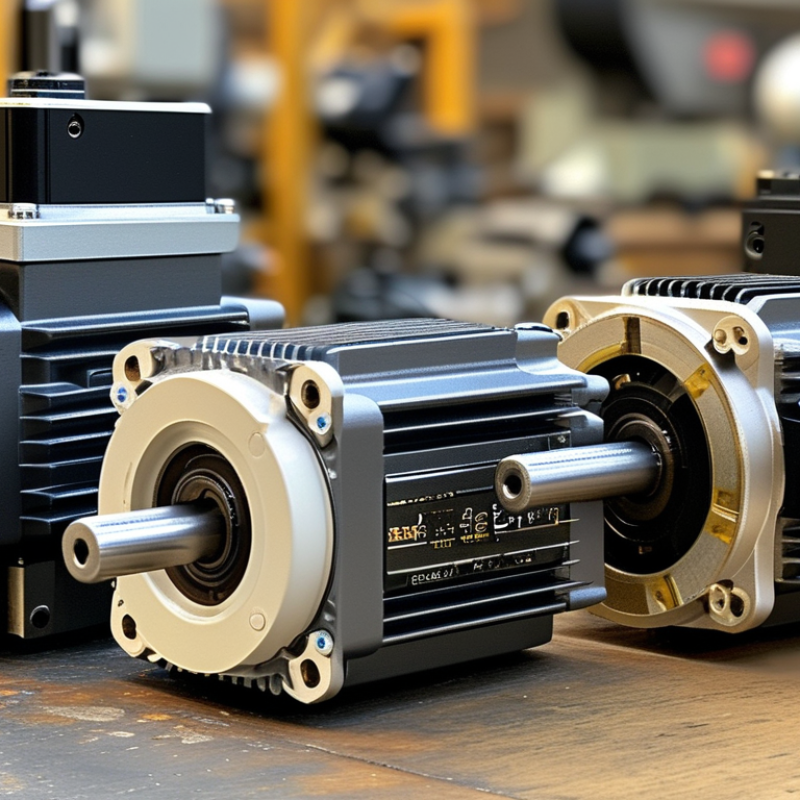
Choosing the right motor with an encoder can significantly impact your project's efficiency. Understanding the basics of motors and encoders is essential for this selection process. Motors convert electrical energy into mechanical motion, while encoders provide feedback on the motor's position and speed. According to industry reports, the global motor market is projected to reach over $200 billion by 2025, highlighting the growth of this technology.
When selecting a motor, consider power requirements and application specifics. The encoder's type—incremental or absolute—also plays a crucial role. Incremental encoders track changes in position, while absolute encoders provide unique position values. These specifications can influence control precision tremendously. A study by the International Society of Automation points out that accurate feedback can enhance system performance by 30% or more.
Tip: Always match the encoder resolution with your application needs. Higher resolution provides better accuracy but may increase costs.
Motor torque and speed should align with your application demands. Different motors offer varied torque characteristics. Be wary of oversizing a motor, as it can lead to inefficient energy use. While a larger motor seems appealing, it can actually introduce unnecessary complexity and costs.
Tip: Calculate required torque carefully to optimize motor selection. Validate your calculations with simulations or prototypes to avoid costly errors.
When selecting a motor with an encoder, understanding your application requirements is vital. Consider factors like load, speed, and torque. Each application has unique demands, influencing your choice. For instance, high-speed applications need motors that can handle quick responses. Think about space constraints too. Compact designs might be essential in some setups.
Tips: Always calculate the required torque for your specific application. This ensures you choose a motor that can perform efficiently without strain. Monitor the environment where you install the motor. Dust or humidity could affect performance and longevity.
Different encoders provide varying levels of precision. Depending on your application, you may prioritize resolution over speed. A mismatch here can lead to inefficiencies. Assess if you require feedback control. This feature can improve accuracy but could increase system complexity.
Tips: Estimate future needs. Opt for a motor that exceeds your current requirements. This adds flexibility for potential upgrades. Don’t overlook the importance of reliable suppliers. Trustworthy sources can offer products that endure the test of time.
| Motor Type | Encoder Type | Application | Torque (Nm) | Speed (RPM) | Voltage (V) |
|---|---|---|---|---|---|
| DC Motor | Incremental Encoder | Robotics | 5.0 | 3000 | 12 |
| Stepper Motor | Absolute Encoder | CNC Machines | 2.5 | 600 | 24 |
| Brushless Motor | Quadrature Encoder | Conveyor Systems | 10.0 | 1500 | 48 |
| Ac Induction Motor | Sine Encoder | Fans and Pumps | 15.0 | 900 | 230 |
When choosing a motor with an encoder, understanding the specific use case is crucial. Different applications require varying motor types. For light-duty automation tasks, stepper motors are often adequate. They provide excellent precision and are easy to control. On the other hand, for high-speed operations, brushless DC motors might be more suitable. These motors offer better efficiency and longer lifespans.
You should also consider torque requirements. If your application needs to lift heavy loads, a servo motor would be a wise choice. These motors excel in providing high torque at low speeds. It's essential to evaluate your needs carefully. Not all motors are created equal.
**Tip:** Always check the motor specifications. Pay attention to the encoder type as well. Incremental encoders are good for tracking position. Absolute encoders offer more precise control.
Another factor is environmental conditions. Motors need protection from dust, moisture, or chemicals. If you work in a harsh environment, choose motors with appropriate enclosures. Also, consider noise levels. Some motors are quieter than others.
**Tip:** Think about the future. Will you need more power later? Select a motor that can handle increased demand. This foresight can save time and money in the long run.
This chart displays the torque ratings (in Nm) for different types of motors commonly used in various applications. Understanding the torque output is essential when selecting the appropriate motor with an encoder for specific needs.
Choosing the right encoder is crucial for optimal motor performance. Encoders provide feedback on the motor's position, speed, and direction. They can vary widely, making selection complex. Understanding your system requirements helps narrow down choices.
Consider the type of application. For high-speed operations, an optical encoder may be preferable. In environments with dust or moisture, a robust magnetic encoder is better. Each has its strengths and weaknesses. Assessing your needs is key.
Tips: Always check compatibility with your motor. Evaluate the feedback resolution required for your application. A low-resolution encoder may not meet precision demands. Be aware of potential noise issues in your environment that can affect performance. Factor in future upgrades. Planning for growth often saves headaches later. Choosing an encoder that can adapt to changes in your system enhances longevity.
Integrating a motor with an encoder can enhance precision in applications like robotics and CNC machines. Start by ensuring compatibility between the motor and the encoder. Both components should have matching specifications, including voltage, speed, and resolution. Mismatched components may lead to inefficiency or system failure. Testing can identify any issues early on.
Once integration is complete, focus on testing the system. Run your setup at various speeds to observe responses. Monitor the encoder's feedback for consistency. Inconsistencies may indicate alignment issues or configuration errors. Document all test results to reference later. This practice will shed light on potential improvements.
Sometimes, the system may not perform as expected. Rethink the integration process. Did you consider the environment? Temperature and vibration can affect performance. Testing in different conditions can reveal hidden problems. Continuous evaluation and adaptation are key to optimizing your motor and encoder system.
: A motor converts electrical energy into mechanical motion for various applications.
Encoders provide feedback on position and speed, enhancing control precision substantially.
Incremental encoders track position changes, while absolute encoders provide unique position values.
Higher resolution improves accuracy but can increase costs. It should fit your application needs.
Oversizing can lead to inefficient energy use and unnecessary complexity in your system.
A servo motor is best, offering high torque at low speeds, suitable for heavy lifting.
Choose motors with protective enclosures for harsh environments to prevent damage from dust and moisture.
Ensure compatibility in specifications like voltage, speed, and resolution to prevent performance issues.
Ignoring environmental factors, such as temperature and vibration, can lead to unexpected performance issues.
Continuous evaluation and adaptation are crucial for identifying improvements and optimizing performance.
When selecting a Motor With Encoder for your specific needs, it is essential to start by understanding the fundamental principles of both motors and encoders. This foundational knowledge allows you to better identify the requirements and constraints of your particular application. Whether you're working on robotics, automation, or any other system that requires precise movements, evaluating various motor types is crucial to ensure optimal performance for your intended use.
Once you have determined the right type of motor, the next step is to choose an appropriate encoder that complements your motor setup. This involves considering factors such as resolution, accuracy, and communication protocols. After selecting the components, it is vital to integrate the motor and encoder system effectively and conduct thorough testing to confirm that the system meets your operational demands. By following these steps, you will be able to choose the ideal Motor With Encoder that satisfies your project's specifications.
