Choosing the right stepper gear motor is crucial for many applications in robotics, automation, and manufacturing. The global market for stepper gear motors is expected to reach $2.2 billion by 2026, according to a recent report by MarketsandMarkets. This highlights the growing demand for precision in motion control.
Dr. Emily Chen, a leading expert in motion control technologies, emphasizes, "Selecting the appropriate stepper gear motor impact efficiencies directly." This highlights the need for careful evaluation. Whether for 3D printing or CNC machines, the right motor ensures optimal performance.
Keep in mind that different applications may require various specifications. Factors include torque, speed, and load capacity. Picking the wrong stepper gear motor can lead to inefficiencies or even failure. Understanding your specific needs and aligning them with the right motor is essential. Each choice reflects your project's success and efficiency.
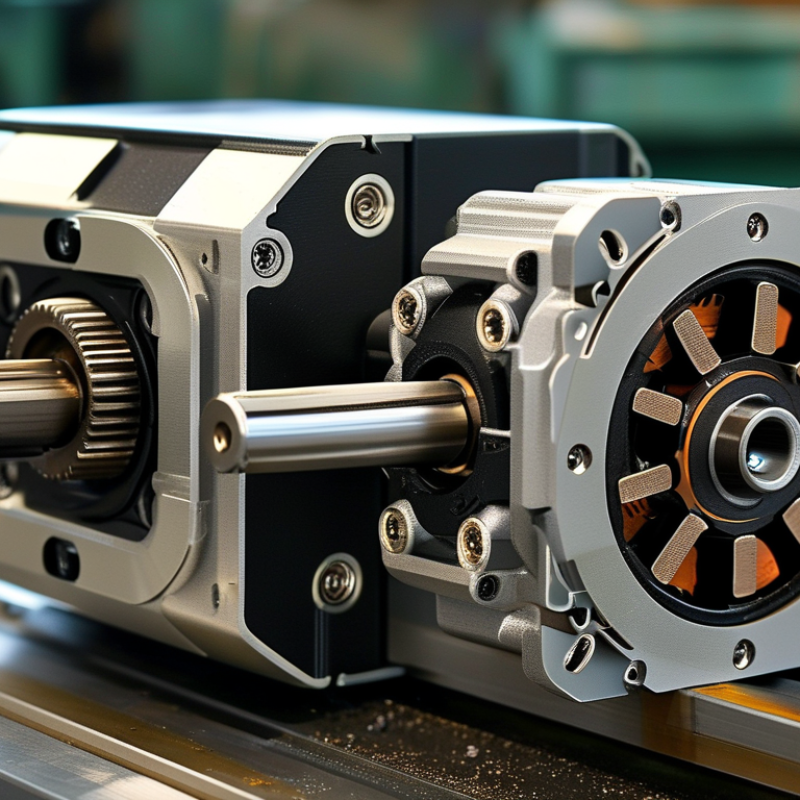
Understanding the Basics of Stepper Gear Motors
Understanding the basics of stepper gear motors
is essential for making the right choice. These motors convert electrical pulses into precise mechanical movements.
They are widely used in robotics, 3D printing, and CNC machinery. Their ability to move in fixed steps allows for
accurate positioning, which is crucial in many applications.
When selecting a stepper gear motor,
consider both torque and speed. Torque
determines how much load the motor can handle, while speed affects how quickly it can operate.
It’s also important to think about the voltage and current ratings. A motor that doesn’t match your requirements
can lead to performance issues and potential failure.
Tips: Always check the motor's specifications. Make sure
it fits your application’s demands. Testing a motor under real conditions can reveal unexpected challenges.
Consider future expansions, too. A motor that seems perfect now may not work later. Be ready to adjust your
choice as needs change. Understanding these factors can significantly improve your project’s success.
Identifying Your Application Requirements for Stepper Motors
Identifying your application requirements is crucial when selecting a stepper motor. Each stepper motor type serves unique applications. You must consider the specific needs of your project before making a decision. Look at the torque required. High torque applications may need a different motor compared to lower torque tasks.
Speed and precision are also vital factors. Some applications demand high speeds, while others require precise positioning. Make sure to evaluate how each motor performs under load conditions. Frequently, users underestimate these aspects, leading to performance issues.
Power supply is another important consideration. Determine the voltage and current requirements for your motor choice. This will affect both your design and overall system reliability. If the motor is underpowered, it could lead to erratic performance. Ensure to check the integration to your existing systems. Proper integration is essential for optimal functioning.
Factors to Consider When Selecting a Stepper Gear Motor
Selecting the right stepper gear motor involves careful consideration of several factors. Start by evaluating the torque requirements of your application. Ensure that the motor can handle the load without stalling. Even a small discrepancy can lead to performance issues.
Consider the motor's step angle. A smaller step angle means more precise control. This is crucial in applications requiring tight positioning. However, more precision can sometimes translate to higher costs. Weigh the need for accuracy against your budget constraints.
Tips: Always match the motor’s specifications with your project needs. Measure the available space for installation. Make sure the motor fits comfortably without overheating.
Power supply is another critical aspect. Ensure that the voltage and current ratings match your system. An inadequate power supply can lead to unpredictable performance. It’s important to analyze your options thoroughly.
In conclusion, reflect on your application's unique needs. Sometimes, the best choice isn’t the most powerful motor. Instead, it could be one that offers a good balance between torque, precision, and cost-effectiveness.
Comparing Different Types of Stepper Gear Motors
When choosing a stepper gear motor, understanding the different types is essential. There are several common types: permanent magnet, hybrid, and variable reluctance stepper motors. Each type offers unique characteristics that suit various applications. For instance, permanent magnet motors are known for their high torque and efficiency, making them ideal for precision tasks. Reports from industry experts reveal that these motors can deliver up to 80% efficiency under optimal conditions.
Hybrid stepper motors combine features of permanent magnet and variable reluctance types. They excel in providing higher resolutions and improved control. According to a recent market analysis, hybrid motors hold approximately 60% of the market share due to their versatility. They are suitable for applications where precise positioning is critical, such as in robotics and CNC machinery. However, their complexity can lead to difficulties in tuning and integration.
Variable reluctance stepper motors are less common but can be useful in specific scenarios. They are simpler and generally less expensive but offer lower torque and efficiency. For applications with higher performance demands, these motors may be less suitable. Users should evaluate the trade-offs between cost and performance. The right choice depends on specific needs and operational parameters. Factors such as load requirements and control precision must be carefully considered during the selection process.
Evaluating Performance Specifications for Your Needs
When selecting a stepper gear motor, performance specifications play a pivotal role.
Torque, speed, and holding strength are crucial.
You need to understand the demands of your application. Higher torque might be necessary for heavy loads, while faster speeds can enhance operational efficiency.
Ensure that the motor's specifications align with the workload.
Another key factor is the step angle. A smaller step angle provides finer movement control.
This precision is vital for applications like 3D printing or robotics.
Look closely at the motor's resolution. Sometimes, motors with a larger step angle offer adequate performance but require more complex control systems.
Choosing a motor with too high a resolution can lead to overspending.
Don’t overlook power requirements. The power supply must match the motor's specifications for optimal performance.
An underpowered motor can result in stalling, while an overpowered variant may lead to overheating.
Lastly, consider the installation environment. Dust, humidity, and temperature can affect motor efficiency.
A motor might work well on paper but falters in real-world settings.
Adjust your choices based on these reflections to ensure the best fit for your needs.
FAQS
: It's a motor that converts electrical pulses into mechanical movements. It allows precise control of movement.
Torque defines how much load the motor can handle. Low torque can lead to performance issues.
Some tasks need high speed. Others prioritize precise positioning. Evaluate your project's specific needs carefully.
Always review the motor’s specifications. Ensure it fits your project’s requirements.
Testing reveals unexpected challenges. Real conditions can significantly differ from theoretical expectations.
Voltage and current ratings are critical. An underpowered motor may perform erratically.
Yes, consider potential future requirements. A current ideal choice may not work later.
A mismatch can lead to performance issues. This could hinder your project's success.
Proper integration with existing systems is essential. Incompatible setups can cause operational problems.
Yes, be prepared to adjust as needs evolve. Flexibility is key for project success.
Conclusion
Choosing the right stepper gear motor is crucial for ensuring optimal performance in various applications. The article begins by outlining the fundamental concepts surrounding stepper gear motors, which are essential in understanding their functionality. It emphasizes the importance of identifying specific application requirements, as this will guide the selection process effectively.
Furthermore, multiple factors are discussed to consider when selecting a stepper gear motor, including torque, speed, and precision. The article also compares different types of stepper gear motors, highlighting their unique characteristics and suitability for different applications. Finally, it delves into evaluating performance specifications, which are vital to meet the unique needs of users, ensuring that the selected stepper gear motor performs efficiently in its intended role.
 OmniDrive Motor
